Pre Roll in Bangkok vs. Street Cones: The Medical-Grade Difference Explained
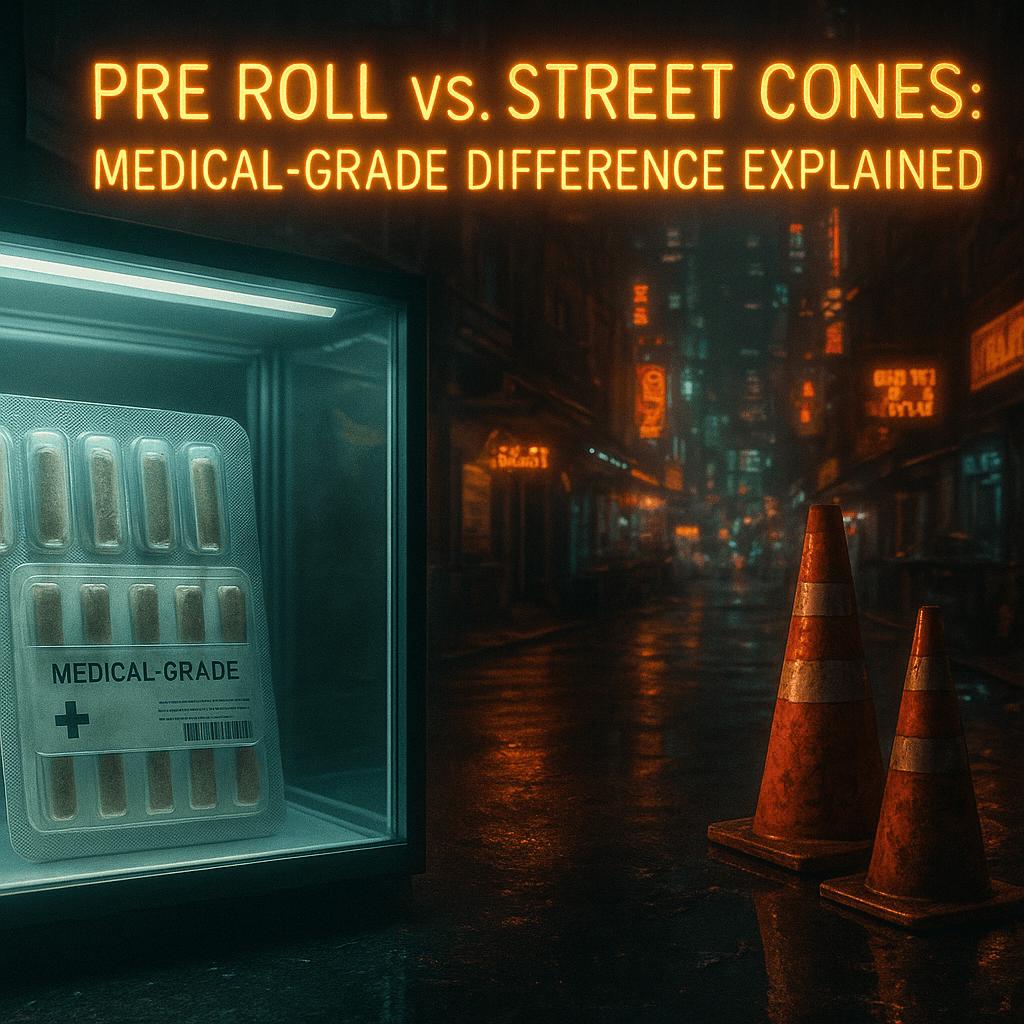
In Bangkok’s current medical cannabis environment, not all pre rolls are created equal. For patients, the difference between a licensed medical pre roll and a street cone is not cosmetic. It is the difference between documented safety and complete uncertainty. This article is written for patient education, not lifestyle use. The focus is medical risk reduction, regulatory compliance, and informed decision-making under Thai law.
Understanding the Medical Context in Thailand
Thailand permits cannabis strictly within a medical and Thai Traditional Medicine framework.
Recreational use remains prohibited under Ministry of Public Health oversight.
Licensed cannabis products must be tied to a therapeutic indication.
They are dispensed under physician supervision, often through clinics in areas such as Sukhumvit.
Street cones exist outside this system entirely.
No doctor, no records, no accountability.
What “Medical-Grade” Actually Means (And What It Does Not)
Medical-grade is not a marketing adjective.
It refers to how the cannabis is grown, processed, tested, and dispensed.
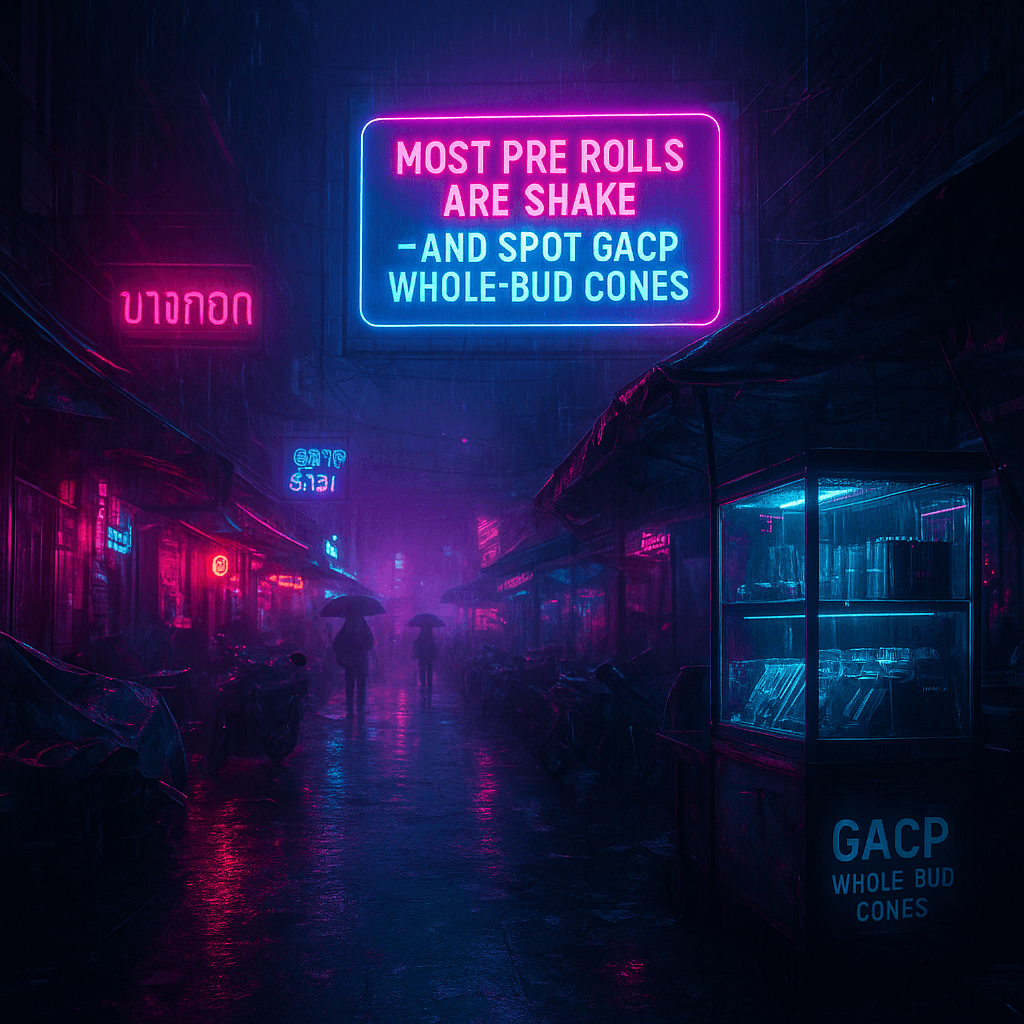
A legitimate medical pre roll in Bangkok is derived from GACP-certified cultivation.
GACP stands for Good Agricultural and Collection Practices, a global standard adapted by Thai regulators.
This means:
- /Controlled soil inputs
- /Traceable genetics
- /Regulated harvesting and storage
Street cones have none of these assurances.
They are anonymous by design.
Cultivation Standards: Whole-Bud Quality vs Unknown Biomass
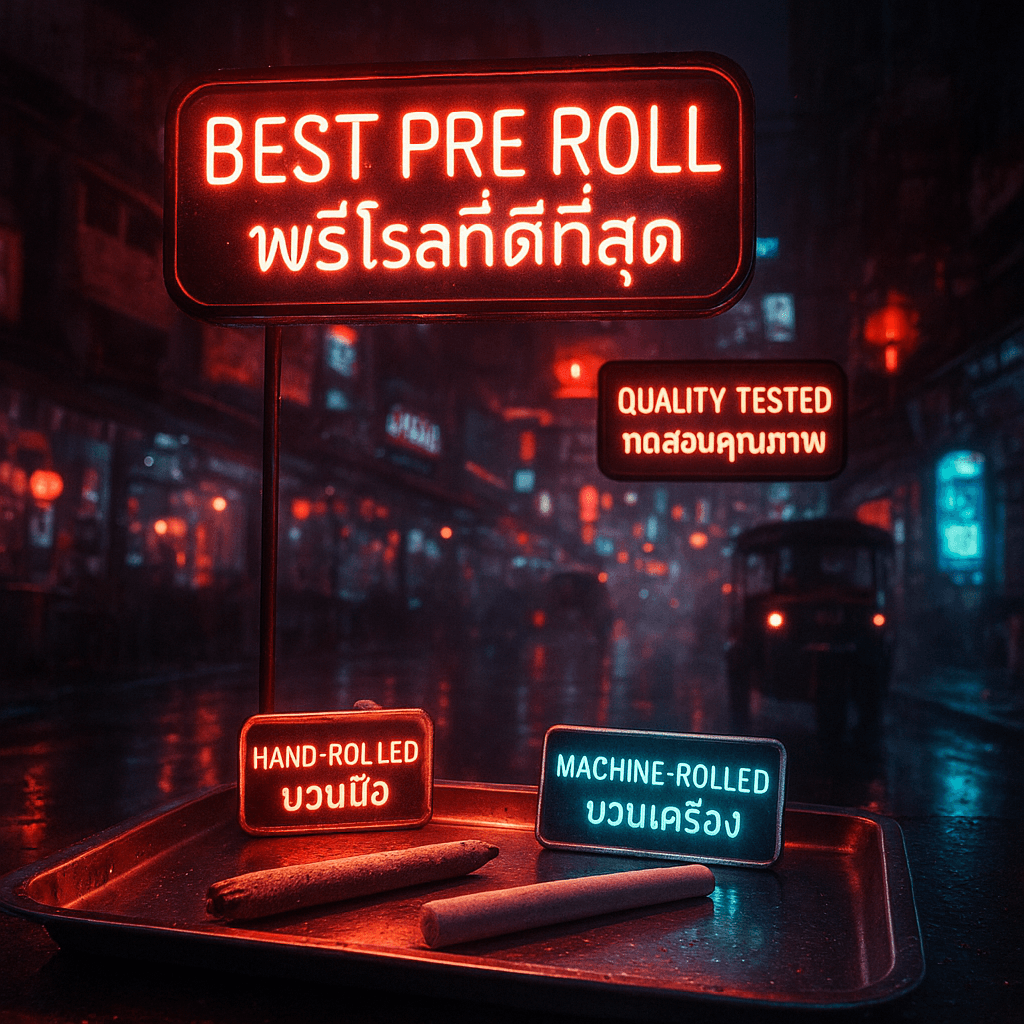
Licensed medical pre rolls are typically made from whole-bud quality flower.
Whole buds retain cannabinoid integrity and predictable terpene profiles.
Street cones are often filled with:
- /Trim
- /Shake
- /Pulverized leftovers
- /Material of unknown age
From a medical standpoint, this matters.
Inconsistent material leads to inconsistent dosing and effects.
Lab Testing Is the Real Divider
Every compliant medical pre roll should be linked to a certificate of analysis (COA).
This document is not optional.
A COA verifies:
- /Cannabinoid content
- /Microbial safety
- /Pesticide screening
Critically, it also includes heavy metal testing.
This is non-negotiable in medical use.
Street cones have no COA.
If contamination exists, no one will ever know until harm occurs.
Heavy Metals: The Risk Patients Rarely See
Cannabis is a known bioaccumulator.
It absorbs lead, cadmium, and arsenic from soil with ease.
Medical-grade cannabis is tested to ensure levels fall below safety thresholds set by the Thai Ministry of Public Health.
Unregulated products are not tested at all.
For patients with chronic conditions, this risk is amplified.
Long-term exposure, even at low levels, is not theoretical.
Doctor Consultation Is Not a Formality
In licensed settings, cannabis use begins with a doctor consultation.
This is not a sales interaction.
Physicians assess:
- /Medical history
- /Contraindications
- /Drug interactions
In Thai Traditional Medicine clinics, cannabis may be integrated cautiously alongside herbal protocols.
This context matters.
Street cones bypass medical oversight entirely.
No screening, no follow-up, no accountability.
Traceability and Patient Protection
Medical cannabis in Bangkok must be traceable from cultivation to dispensing.
This chain protects both patient and provider.
If a quality issue arises:
- /The batch can be identified
- /Distribution can be halted
- /Patients can be notified
Street cones have no batch numbers.
No recall is possible because nothing is recorded.
Licensed Medical Pre Rolls vs Street Cones (Quick Comparison)
Licensed Medical Pre Rolls
- /GACP-certified cultivation
- /Whole-bud quality
- /COA with heavy metal testing
- /Physician oversight
- /Legal medical framework
Street Cones
- /Unknown origin
- /No lab testing
- /No dosage consistency
- /No medical supervision
- /Legal exposure for patients
This is not a price comparison.
It is a safety comparison.
The Role of Sukhumvit Medical Clinics
Sukhumvit medical clinics play a key role in patient access.
They operate under direct regulatory scrutiny.
These clinics typically:
- /Require medical documentation
- /Store products under controlled conditions
- /Maintain patient records
They are not underground dispensaries.
They are healthcare environments adapting to a regulated medical tool.
A Practical Medical Safety Checklist for Patients
Before considering any pre roll for medical use, verify the following:
- /Is there a doctor consultation documented?
- /Is the product derived from GACP-certified cultivation?
- /Can the provider show a certificate of analysis (COA)?
- /Does the COA include heavy metal testing?
- /Is the product dispensed through a licensed clinic or medical facility?
If any answer is unclear, pause.
Medical caution is not paranoia.
Why Street Cones Persist Despite the Risks
Street cones exist because they are fast and anonymous.
They appeal to convenience, not care.
From a medical perspective, this is exactly the problem.
Speed and anonymity remove every protective layer.
Patients deserve better than guessing what they are consuming.
Especially in a regulated medical environment.
Fiercely Honest Take: Harm Reduction Is Not Optional
Medical cannabis is not inherently benign.
It requires the same scrutiny as any therapeutic substance.
Licensed pre rolls are not “safe” by default.
They are safer because they are measured, tested, and supervised.
Street cones are not rebellious alternatives.
They are clinical unknowns.
Final Clinical Perspective
Choosing a medical pre roll in Bangkok is not about preference.
It is about risk management within the law.
The Thai Ministry of Public Health has created a framework focused on patient protection.
Ignoring that framework removes every safeguard designed to keep patients safe.
Medical-grade is not hype.
It is documentation, oversight, and accountability.
Medical Disclaimer
This article is for educational purposes only and does not replace professional medical advice. Always consult a licensed physician before using any medical cannabis product in Thailand.