Cannabis Strains in Bangkok: What “Licensed” Actually Means for Visitors
In Bangkok, the phrase “licensed cannabis strains” is not a marketing slogan. It is a regulatory status with legal, medical, and safety implications defined by the Thai Ministry of Public Health. If you are a patient seeking compliant medical pre-rolls or flower products, understanding this distinction is essential—not optional. This guide breaks down what “licensed” actually means in Thailand in 2026, how GACP and COAs work, and how patients can protect themselves in a tightly regulated medical-only market.
The Legal Reality in Thailand (2026): Why “Licensed” Matters
Thailand does not permit recreational cannabis use. Full stop. Cannabis products are allowed only within a regulated medical and Thai Traditional Medicine framework overseen by the Ministry of Public Health.
When a dispensary in Bangkok uses the term licensed, it must refer to:
- /Government-issued authorization to distribute cannabis
- /Products sourced from approved cultivation facilities
- /Compliance with national quality and safety standards
Anything outside this framework exposes patients to legal risk and health uncertainty.
What a “Licensed Cannabis Strain” Actually Is
A licensed cannabis strain in Bangkok is not defined by its name or popularity. It is defined by its documentation, traceability, and testing.
At minimum, a licensed product must:
- /Originate from a GACP-certified cultivation facility
- /Be distributed through a Ministry-approved channel
- /Include a valid certificate of analysis (COA)
- /Meet contaminant and heavy metal testing thresholds
If one of these elements is missing, the product is not legally compliant—regardless of how it is packaged or described.
GACP-Certified: The Foundation of Medical-Grade Cannabis
GACP (Good Agricultural and Collection Practices) is the agricultural standard required for medical cannabis cultivation in Thailand.
GACP certification covers:
- /Controlled growing environments
- /Soil, water, and nutrient monitoring
- /Proper harvesting and drying protocols
- /Contamination prevention at farm level
For patients, GACP matters because it reduces exposure to mold, pesticides, and environmental toxins before lab testing even begins.
Whole-Bud Quality: Not an Aesthetic Choice
Licensed medical cannabis in Thailand is typically produced using whole-bud quality flower, not trim or shake.
Why this matters:
- /Whole buds retain consistent cannabinoid distribution
- /Less surface area means lower contamination risk
- /Better preservation during storage and transport
Pre-rolls made from whole buds are easier to test accurately and offer more predictable profiles—critical for patient safety.
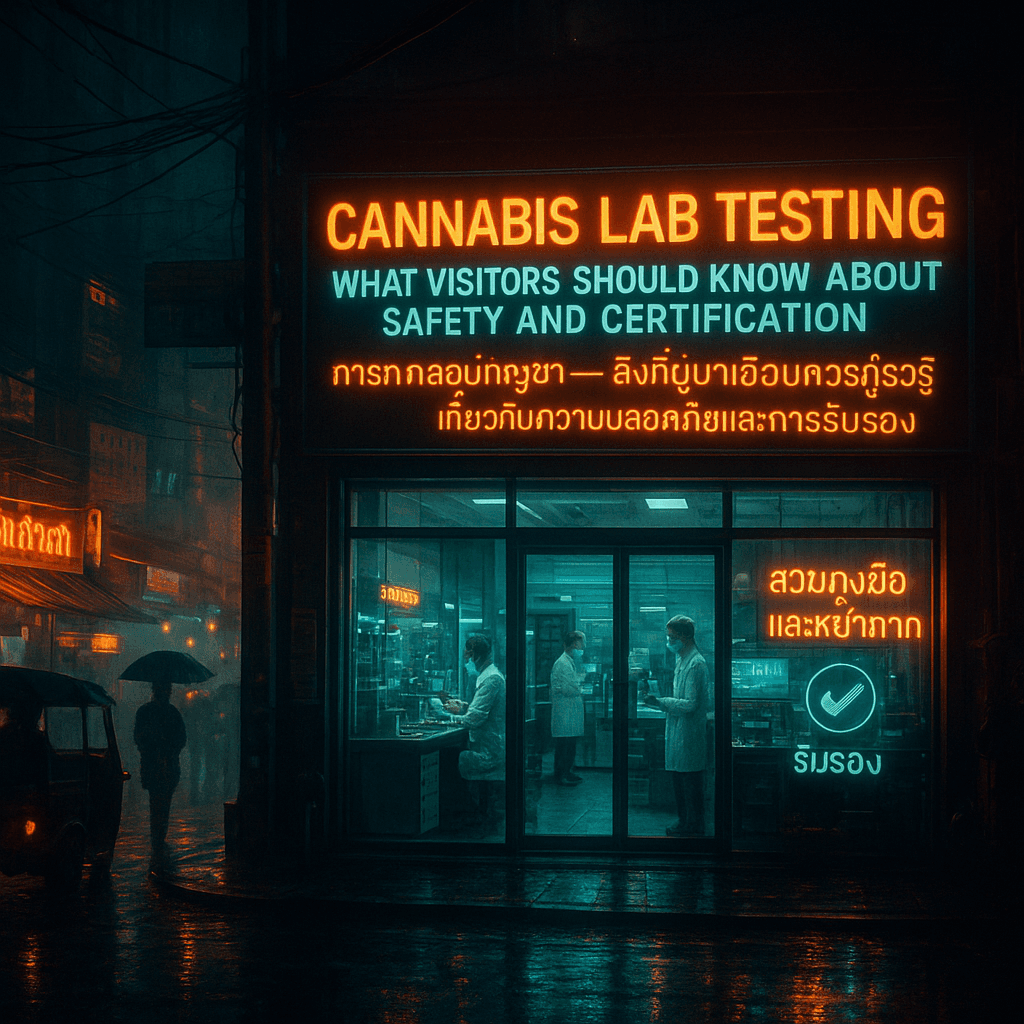
Certificate of Analysis (COA): Your Non-Negotiable Document
A certificate of analysis (COA) is a third-party laboratory report tied to a specific batch of cannabis.
A valid COA in Thailand should include:
- /Cannabinoid content (e.g., THC, CBD)
- /Heavy metal testing results
- /Microbial screening (mold, bacteria)
- /Pesticide residue analysis
If a dispensary cannot show a COA—or only provides a generic sheet—it is a red flag.
Heavy Metal Testing: The Risk Patients Rarely See
Cannabis is a bioaccumulator. It absorbs contaminants from soil and water, including lead, arsenic, mercury, and cadmium.
Licensed products undergo mandatory heavy metal testing to ensure levels fall below Ministry of Public Health limits. Unregulated products do not.
This is not a theoretical concern. Long-term exposure to heavy metals is a documented medical risk, particularly for immunocompromised patients.
Thai Traditional Medicine and Modern Medical Oversight
Cannabis in Thailand exists within two recognized frameworks:
- /Modern medical use
- /Thai Traditional Medicine
Licensed dispensaries operate as distributors and educators within these frameworks. They do not diagnose or prescribe.
Any legitimate dispensary will:
- /Encourage doctor consultation as an external clinical standard
- /Reference physician oversight without replacing it
- /Avoid making medical claims or dosage recommendations
This separation is intentional—and legally required.
Licensed Safety Checklist (For Patients in Bangkok)
Before purchasing any cannabis product, especially pre-rolls, verify the following:
- /✔ Dispensary license displayed and verifiable
- /✔ Product sourced from GACP-certified cultivator
- /✔ Batch-specific certificate of analysis (COA) available
- /✔ Clear heavy metal and contaminant testing results
- /✔ Transparent product labeling and traceability
- /✔ Staff trained in compliance, not medical advice
If a step feels rushed or unclear, pause. Legitimate operators respect informed patients.
Licensed Pre-Rolls vs Unregulated Products (Short Comparison)
Licensed Dispensary Pre-Rolls
- /Tested for contaminants
- /Whole-bud quality inputs
- /Traceable supply chain
- /Legal patient protection
Unregulated Products
- /No verified testing
- /Unknown cultivation source
- /Legal exposure for patients
- /Higher health risk
The difference is not subtle—it is structural.
Why Sukhumvit Licensed Dispensaries Matter
Areas like Sukhumvit host some of Bangkok’s most visible licensed dispensaries. Visibility, however, does not equal compliance.
Reputable Sukhumvit licensed dispensaries distinguish themselves by:
- /Proactive education, not persuasion
- /Open access to lab documentation
- /Clear boundaries around medical claims
- /Alignment with Ministry of Public Health standards
Professional skepticism is healthy. Good operators expect it.
Final Word: Licensed Means Documented, Tested, Accountable
In Bangkok, licensed cannabis strains are defined by paperwork, process, and public health standards—not branding or strain names.
Patients who understand GACP, COAs, and testing requirements are better protected legally and medically. That knowledge is the real harm-reduction tool in Thailand’s medical cannabis system.
Licensed Disclaimer
This article is for educational and harm-reduction purposes only. It does not provide medical advice, diagnosis, or treatment. Always consult a qualified physician under Thai law before any medical cannabis use.